

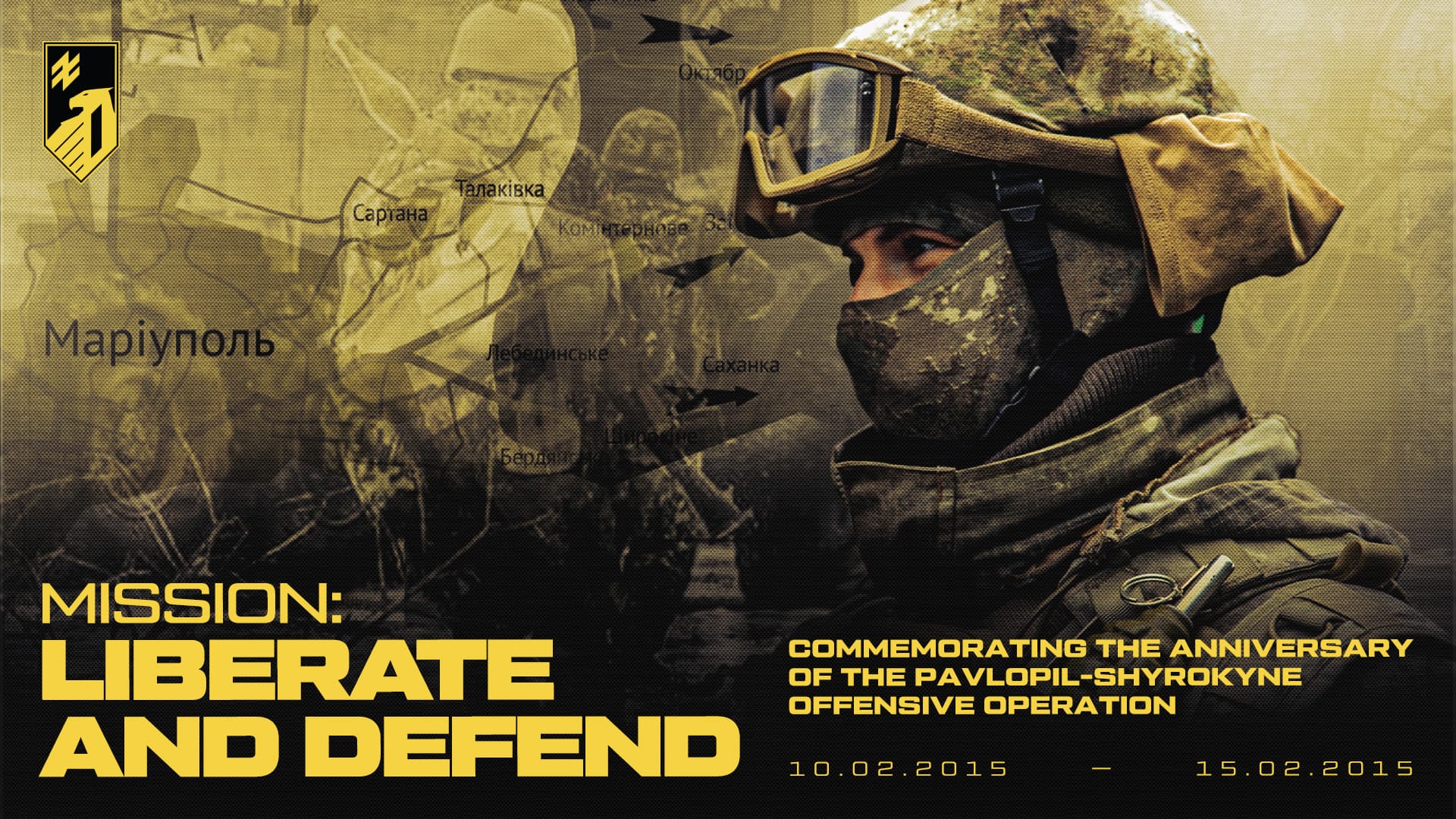
At dawn on February 10, 2015, one of the most daring and successful offensive operations of the Anti-Terrorist Operation period began. Azov launched a rapid assault on enemy fortifications between Pavlopil and Shyrokyne. These settlements east of Mariupol were liberated within a single day, along with Kominternove, Berdianske, and Lebedynske.
To repel the offensive, the Russian side was forced to divert reserves originally intended to develop its own initiative near Debaltseve, while also losing advantageous positions for a potential advance on Mariupol. Fierce fighting continued until February 15, despite the Russian side’s significant superiority in equipment and manpower. On February 15, following the ceasefire agreed in Minsk, the active phase of the Pavlopil–Shyrokyne offensive operation was halted, and the confrontation transitioned into a positional phase. Over five days of fighting, Azov suffered heavy losses, with ten of our brothers-in-arms giving their lives. However, Russian forces and their proxies were pushed more than 20 kilometers away from Mariupol, making further terror against the city’s civilian population impossible.
The Pavlopil–Shyrokyne offensive operation stands as a clear example of how the courage and determination of fighters, even in the absence of heavy equipment and artillery, can enable a unit to achieve its objectives and drive the enemy from positions it had arrogantly considered its own.


