
This war is not merely a clash of armies. It is the ultimate test of two diametrically opposed systems that emerged from the post-Soviet space.
Ukrainian and Russian Military Systems: A Key Difference
The Ukrainian system is a network model built on trust, one that unleashes human potential. Many of these changes are initiated and developed by ordinary citizens, soldiers, sergeants, and junior officers.
This includes the transition of the Ukrainian Defense Forces to a corps-based structure, a move Azov pushed for as a necessary step.
The Ukrainian Defense Forces, particularly in units that grew out of the volunteer movement, like Azov, have cultivated a command philosophy rooted in decentralization and delegation of authority.
This model is a modern interpretation of the German concept of Auftragstaktik (Mission Command) developed for combat operations on a dynamic, non-linear battlefield.
At its core, senior command defines the objective and the desired outcome: the “what” and the “why.”
From there, subordinate commanders develop their decisions for approval, either in coordination with their commander or independently. The “how” remains at the discretion of commanders on the ground, who have the most up-to-date picture of the battlefield.
This creates a high-trust environment where initiative is not merely encouraged; it is the foundation of combat effectiveness.
A vivid example is what the Ukrainian Defense Forces did in the Dobropillia sector in the second half of 2025, a fundamental reimagining of mobile defense under the conditions of modern war.
The Russian command-and-control system is the exact opposite. It is a rigid, vertically integrated hierarchy of the Soviet model, where every step is dictated from above.
This system was not built for maximum combat effectiveness. It was built to maintain political control over the army, a structure where loyalty to the regime has always mattered more than competence.
Why the Corps Structure Became Essential for Ukraine’s Defense Forces
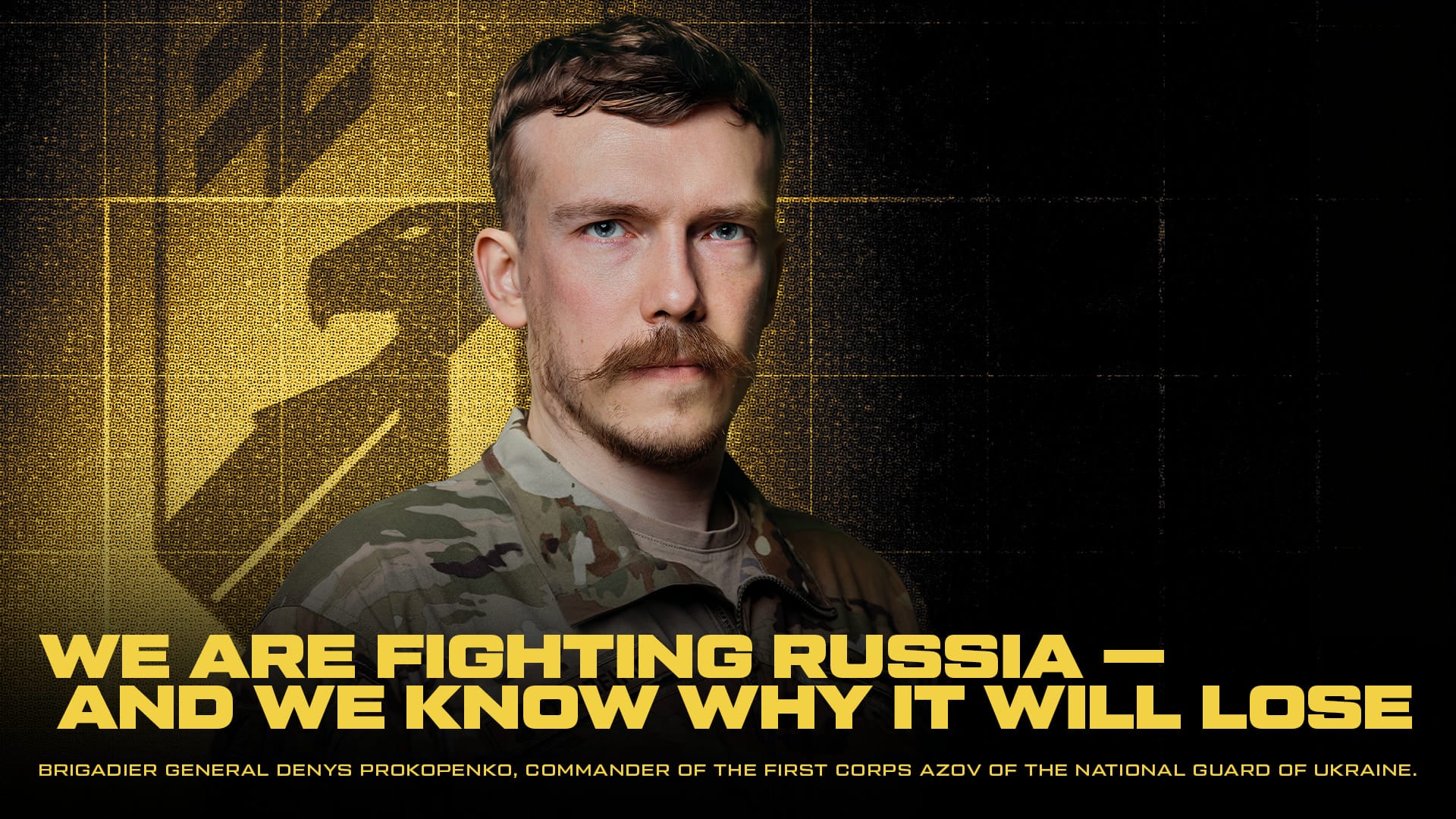
In March, we marked the first anniversary of First Corps Azov of the National Guard of Ukraine.
In a short period, the corps command and staff were assembled from combat officers with years of frontline experience. The overwhelming majority rose through every level of command, holding both command and staff positions, taking responsibility, and learning this war from the trenches up.
All brigades are holding the defense within the corps’ designated sector and are executing their combat missions side by side, to the required standard.
How the 1st Corps of the National Guard of Ukraine “Azov” Built Effective Coordination on the Front Lines
Boundary gaps between brigades have been eliminated, denying the enemy the ability to exploit weak points along the main line of defense and develop breakthroughs into operational depth.
Attached units from the Armed Forces of Ukraine, the National Guard, the State Border Guard Service, and the National Police are performing combat tasks to the same standard as organic units and have become an integral part of the corps.
The Defense of Donbas and the Results of the Corps Model on the Battlefield
In the summer of 2025, the enemy concentrated its main effort in the Dobropillia sector, achieving a breakthrough 15km wide and up to 20km deep.
In coordination with the Ukrainian Defense Forces, the enemy’s advance was halted, successful counteroffensive actions were conducted to restore lost positions, and the stability of the defense was secured.
On my initiative, the corps’ sector is being gradually expanded to reinforce flanks, cover sections of the front under attack, and increase defensive resilience where needed, freeing up neighboring corps’ units and allowing them to recover.
Deep Strike Capability and Adaptation to Modern Warfare
We have closed the tactical-operational and operational depth: reconnaissance, fires, and mining. Enemy equipment, supply depots, and field command posts are burning up to 250km behind the front line.
Western partners are learning from us and are eager to adopt our combat experience.
The Battle for Donbas is at its peak. We keep working, keep hitting the enemy, and keep fighting to bring our prisoners of war home.


