
A Battle Lost by More Than Sweden
At the turn of the seventeenth and eighteenth centuries, the Central European space stood on the threshold of sweeping change. In the east, the Muscovite state was rapidly growing in strength; at the heart of Europe, the nucleus of the Prussian Kingdom was taking shape. The Swedish Empire controlled nearly the entire Baltic coastline, while across the territories of Poland, Belarus, Lithuania, and Ukraine, the principal players remained the Polish-Lithuanian Commonwealth, the Cossack Hetmanate, and the Crimean Khanate, all weakened by mutual rivalry.
Between 1700 and 1721, a great war engulfed the lands stretching from Finland to Wallachia, from Denmark to Ukraine: the Great Northern War, which shattered the fragile balance of power in the region. The pivotal event of that war was the Battle of Poltava in 1709. Its consequences, following the defeat of the Swedes and Ukrainian Cossacks, marked the beginning of the collapse of the Swedish Empire, buried Ukrainian hopes of forming an independent state, and opened the road to the destruction of the Polish-Lithuanian Commonwealth and the Crimean Khanate. The diverse world of Central Europe would soon dissolve into the uniform ranks of empires.
The Mazepa-Charles Alliance: The Logic of the Decision
At the outset of the Northern War, the Left-Bank Hetmanate was governed by Ivan Mazepa, who carefully balanced between rival factions of the Cossack officer class and checked the centralizing ambitions of the Muscovite tsar, Pyotr Alekseyevich (Peter I).
The Hetman watched the course of the war with growing unease as Swedish King Charles XII effortlessly crushed his enemies and eventually occupied Poland, installing his ally Stanisław Leszczyński on the throne in Warsaw.
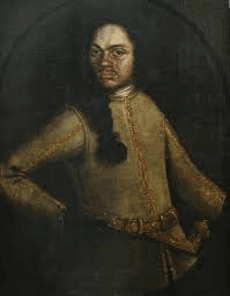
In 1707–1708, Charles XII was preparing for a march on Moscow. Mazepa received intelligence suggesting that Ukrainian lands might be transferred to the Swedish ally Leszczyński. In accordance with his treaty obligations with the tsar, the Hetman requested that Peter I return the Cossack regiments from the Baltic theater of operations to Ukraine and additionally provide 10,000 Muscovite troops to defend against the Poles. The autocrat’s response was stunning: defend yourself. To make matters worse, the tsar began “reforming” the Hetmanate, informing Mazepa of his intention to replace it with a Kyiv Governorate. The tsar’s actions nullified the treaties concluded between them. Ivan Mazepa had not only the right but the obligation to save his state by seeking new diplomatic combinations.
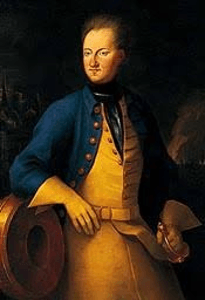
Meanwhile, Charles XII advanced on Moscow through Belarus. In the spring and summer of 1708, fortune favored the Swedes. On July 14, near Holovchyn, they routed the Muscovites, whose remnants took shelter in the Smolensk fortress. After this victory, the king halted the campaign to await reinforcements. But the reinforcements from home never came, destroyed by the Muscovites while still on the march. Charles XII was forced to postpone the eastward advance until the spring or summer of 1709, and faced the urgent need to quarter his troops for the winter. No better opportunity presented itself than to act on the idea of an agreement with the Ukrainian Hetman, and the king sharply turned his forces southward, entering the territory of the Starodub region.
The sudden change in Swedish plans caught Hetman Ivan Mazepa off guard. Most of his Cossack regiments were scattered across the Baltic theater of operations, leaving him with no more than 12,000 sabers. To make matters worse, the tsar summoned the Hetman to his field headquarters, where most of the regimental colonels were already present. Mazepa and his inner circle were convinced that a visit to the Muscovite camp would be a trap in which Peter I would arrest him along with his entourage and announce the liquidation of the Hetmanate to the officer class. The game of closed cards was over. On November 4, 1708, the Hetman crossed the Desna River with two thousand Cossacks and senior officers and arrived at Charles XII’s headquarters, leaving the main stores of weapons, provisions, and fodder, along with a reliable garrison of 10,000, in the capital city of Baturyn.
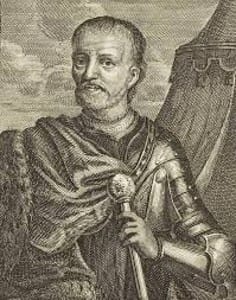
Negotiations and the conclusion of a written agreement between Ukraine and the Swedes took place between November 5 and 10, 1708, in the town of Hirky. Scholars do not have the original text of the agreement, only copies of the treaty articles. The essence of the document was the recognition by the King of Sweden of the sovereign Rus’ Principality, which entered into a military-political alliance with Sweden for a joint war against Muscovy. The Swedish Kingdom guaranteed non-interference in the internal affairs of the principality. The Hetman undertook to quarter Swedish troops for the winter of 1708–1709 and to supply them with food and fodder.
Tsarist Vengeance
Upon learning of the Mazepa-Charles XII agreement, the Muscovite despot launched two operations: an information warfare campaign and a punitive strike. The information warfare campaign used the Moscow-controlled church to place a curse on the Hetman. The punitive operation called for the destruction of Baturyn and the execution of its population. Both were carried out with lightning speed. On November 12, 1708, the Muscovite church cursed Mazepa, while the tsar’s general, Alexander Menshikov, arrived at the walls of the Baturyn fortress with 30,000 troops.
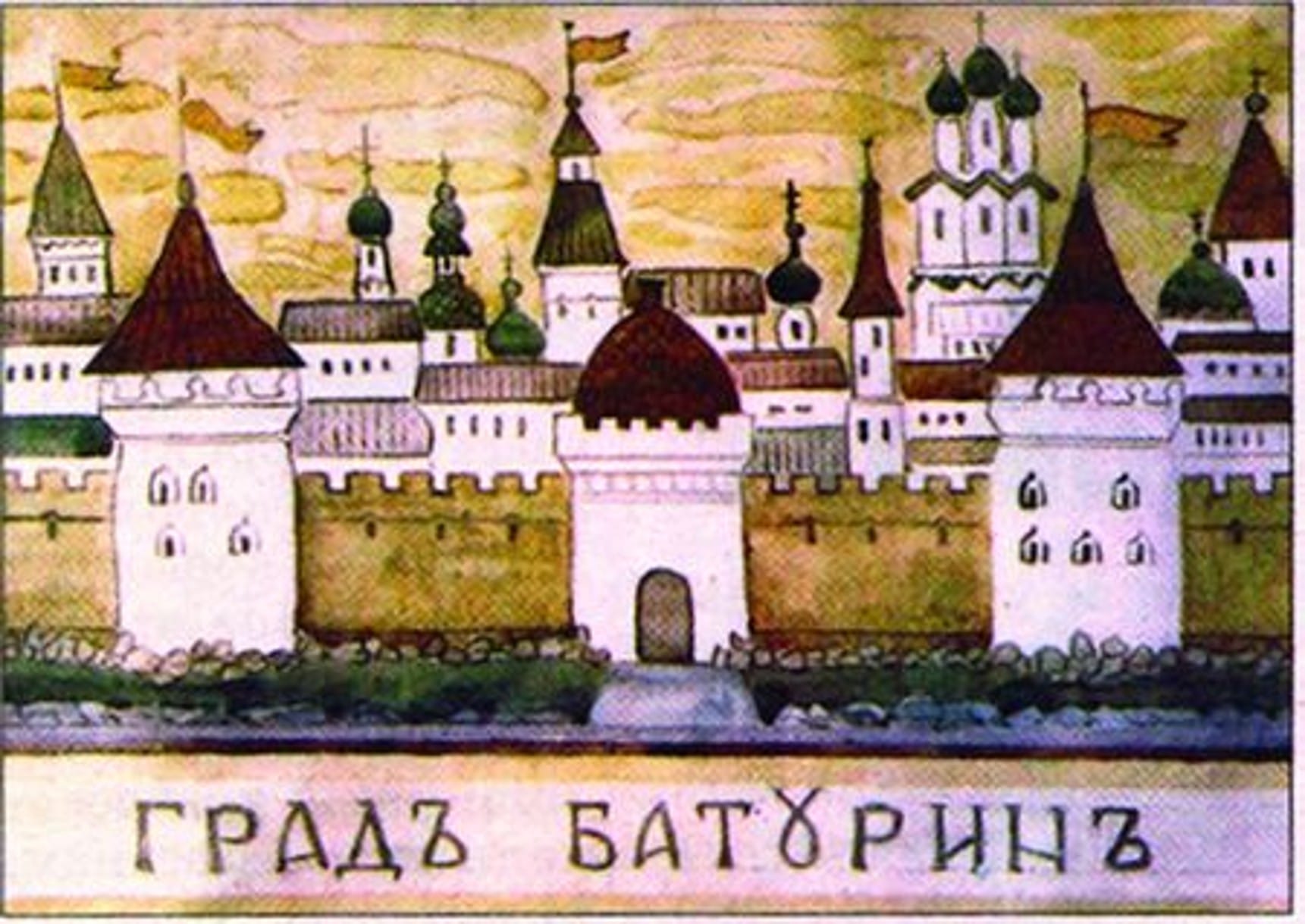
In the Hetman’s capital, upon receiving Menshikov’s demand to lay down arms, the officer council convened. Among all those present, only two men called for submission to the tsar’s demands: acting Pryluky colonel Ivan Nis and military interpreter Stefan Zertys. The outraged officers condemned them to death. Fortress commandant Colonel Dmytro Chechel ordered the traitors chained to cannons, and the sentence was carried out the following day.
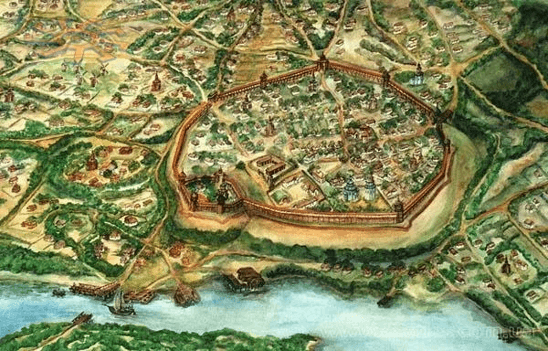
The battle began. Under Ukrainian artillery fire, the Muscovites launched their assault. By nightfall, 3,000 dead Muscovite soldiers lay in the approaches to Baturyn. The offensive stalled. But then traitors came to the enemy’s aid. Colonel Nis, fighting for his life, persuaded one of his regimental officers, Solomakha, to slip through the secret underground passages out of Baturyn to the Muscovite camp and lead enemy troops through them into the heart of the fortress under cover of darkness.
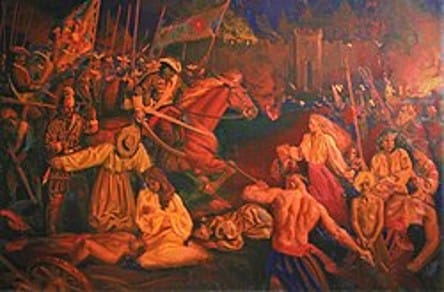
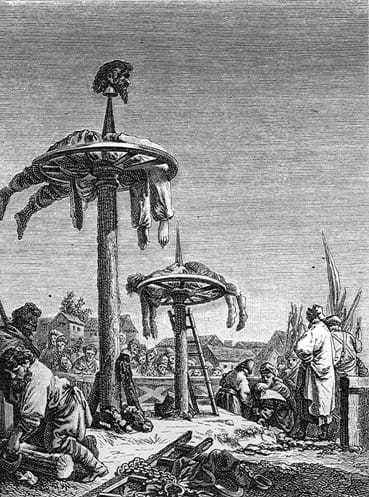
On the morning of November 13, 1708, the Muscovites entered the city through the underground passages. Outside, Muscovite regiments launched their assault while the saboteurs struck the defenses from the rear. Baturyn fell. Civilians and prisoners of war, up to 15,000 in total, were killed on the spot. Nine hundred Cossack officers were tortured to death in the town of Lebedyn, where Menshikov had established his headquarters. The Baturyn tragedy sowed terror across Ukraine at the prospect of the tsar’s wrath, paralyzing any further resistance.
The Battle of Poltava: An Anatomy of Defeat
The destruction of Baturyn proved decisive for the subsequent course of the campaign. Gripped by fear, Ukrainian Cossacks and townspeople dared not break with the tsar. Only the Zaporozhian knights, up to 12,000 sabers strong, led by Kish Otaman Kost Hordiienko, came to serve under the Hetman’s mace.
Having lost his capital, Mazepa hoped to quarter the Swedish forces in the prosperous city of Poltava. On December 4, 1708, he wrote to Poltava colonel Ivan Levenets, urging him to join the uprising. Levenets agreed to support the Hetman and appealed to the townspeople and Cossacks accordingly.
While the people of Poltava were still debating the Hetman’s proposal, Muscovite commandant Aleksei Kelin forced his way into the city with a garrison of 4,300 soldiers. The Muscovites acted decisively: Colonel Levenets was arrested and removed, the Cossacks were assigned new commanders, and the city was prepared for a prolonged siege. Mazepa and Charles XII had lost their chance to winter in adequate conditions.
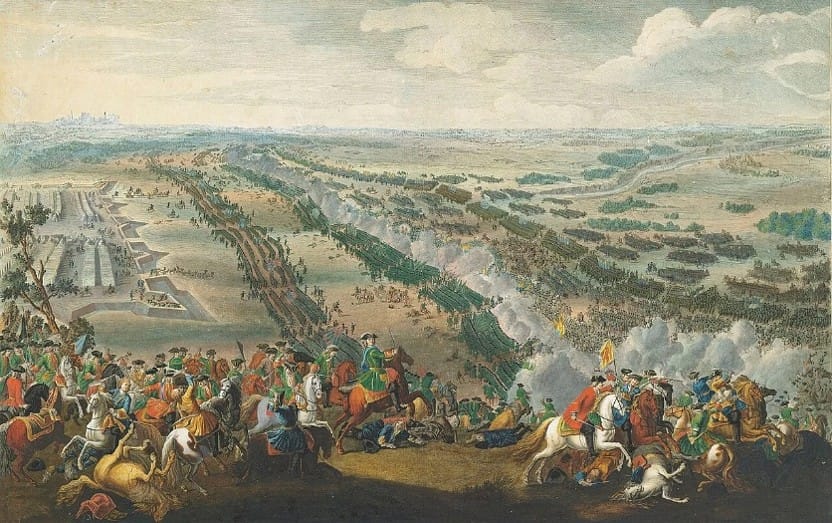
In the spring of 1709, without artillery and with an army exhausted by a brutal winter, the young king made a decision that would prove fatal: to march on Moscow. Yet he could not leave Poltava in his rear with an enemy garrison holding it. In early May, the royal forces attempted to take Poltava by storm, but lacking artillery — the Swedes had just six cannon — they suffered heavy losses, fell back, and began a siege. The Poltava garrison was tying down the already meager Swedish resources: Charles’s army numbered 31,000 men, while Hetman Mazepa commanded 14,000–15,000 Cossacks.
In June 1709, Tsar Peter arrived at Poltava with 42,500 Muscovite soldiers and 102 cannon, along with his appointed Hetman Ivan Skoropadsky with 4,000–5,000 Ukrainian Cossacks and 10,000 Kalmyks and Don Cossacks. The situation for Charles XII and Ivan Mazepa was becoming critical.
Staking everything on a single throw, the Swedish king ordered his forces to prepare for offensive action. But fortune turned away from the young commander once more:
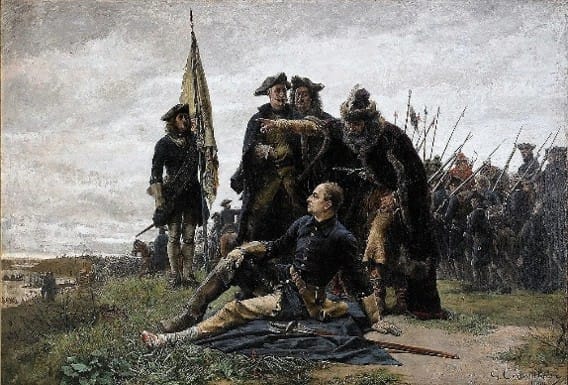
- On July 7, 1709, Charles XII suffered a serious leg wound and could not personally lead his troops;
- At around 5:00 a.m. on July 8, the Swedes, under Field Marshal Carl Gustaf Rehnskiöld, attacked the Muscovite positions;
- Under artillery fire, Swedish grenadiers managed on their second attempt to seize two enemy redoubts, but were unable to hold them;
- Muscovite artillerists drove the Swedish infantry back with withering fire and neutralized the royal cavalry;
- After regrouping, both armies became locked in hand-to-hand combat;
- The numerical superiority of the Muscovite forces proved decisive;
- The Swedish infantry broke. By 11:00 a.m., the Swedish army had been routed;
- Senior officers were taken prisoner;
- Charles XII, under the protection of Mazepa’s forces, was evacuated along with wounded Swedish soldiers and a three-thousand-strong detachment of royal guards to the western bank of the Dnipro;
- The remnants of the Swedish army laid down their arms;
It was a catastrophe. Sixteen thousand Swedes were taken captive, over 9,000 were killed, and nearly 3,000 more were wounded.
Pylyp Orlyk and the Constitution in Exile
Ivan Mazepa retreated with Charles XII to the Moldavian Principality, a vassal of the Ottoman Empire. The Hetman did not survive the Poltava catastrophe and died on September 21, 1709, in the village of Varnytsia near Bender. On April 5, 1710, the Cossack exiles elected Pylyp Orlyk as Hetman. His election was accompanied by the signing of a document destined to enter history as the Constitution of Pylyp Orlyk.
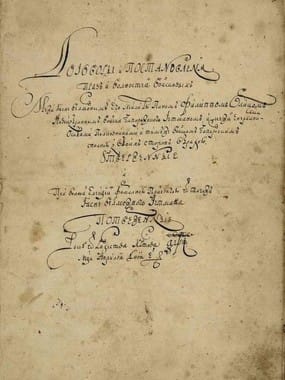
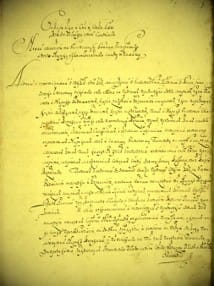
The document provided for:
- The creation of an estate-based parliament in Ukraine;
- the separation of powers;
- the principle of elected office;
- regulation of the tax system;
- the rights of the estates;
- social guarantees for orphans and widows, and more.
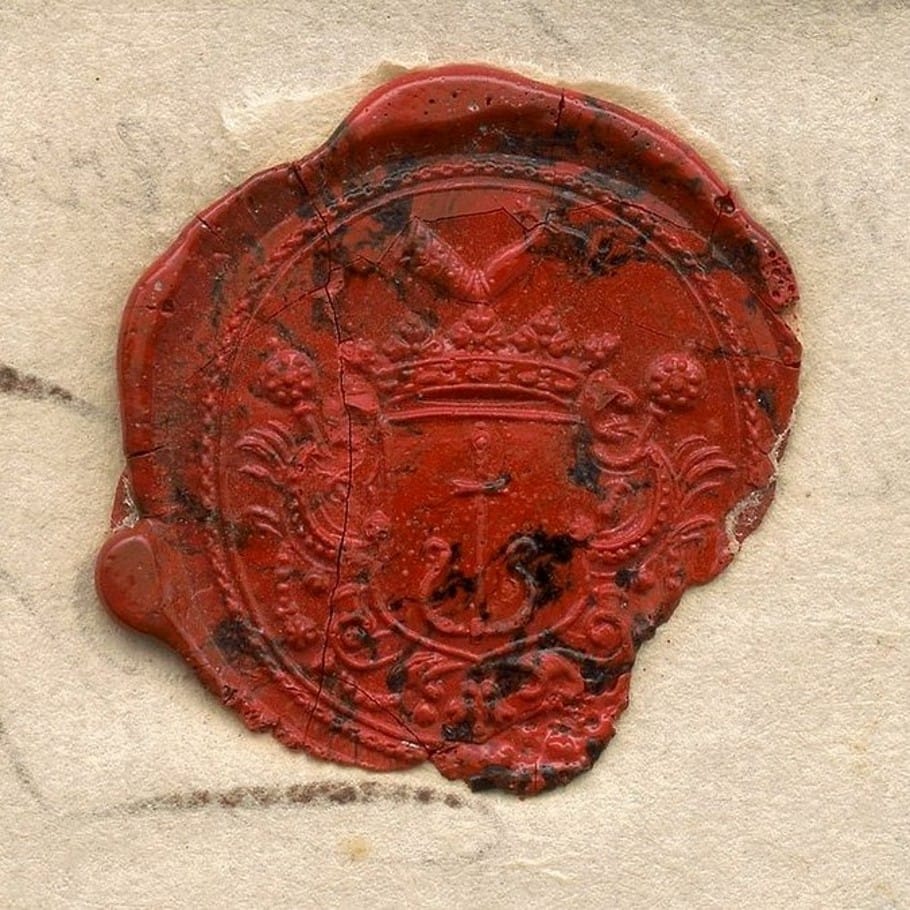
The Hetman and his supporters created a vision of a Ukrainian state. All that remained was to bring it to life. Yet every attempt by Pylyp Orlyk to establish a foothold in his homeland, and all his diplomatic efforts to draw allies into the struggle for Ukrainian statehood, failed. Pylyp Orlyk and his Constitution remained a symbol of a desperate but hopeless struggle against tyranny against the backdrop of national catastrophe.
After Poltava: The Hetmanate and russia
Tsar Peter did not forget the challenge the Cossacks had thrown at him. He pursued their systematic destruction:
- The foundations of the Ukrainian state were dismantled, including the abolition of the Hetmanate and the creation of the Little Russian Collegium;
- the Ukrainian army was driven into degradation;
- the Ukrainian economy was ruined through heavy taxes and tariffs;
- the Ukrainian population was physically decimated through mass conscription into forced labor;
- the land was filled with Russian landowners, military officers, merchants, and bureaucrats;
- the territories of Zaporizhzhia, destroyed for its support of Mazepa, were resettled with migrants from the Balkans and Germany.
The death of Peter I in 1725 prevented him from delivering the final blow to the Cossack state. Certain elements of state life were partially rebuilt in the 1730s–1760s, but this was no more than a faint echo of the Hetmanate’s former power and glory. The black hole of Muscovite-Petersburgian absolutism swallowed Ukraine, plunging it into the darkness of statelessness, until the First World War once again overturned the chessboard entirely.