
Introduction: A Chocolate Box from the NKVD
May 23, 1938, Rotterdam, the Netherlands. A man of medium height, dressed modestly yet carrying himself like a true gentleman, walks down Aert van Nesstraat toward the Atlanta restaurant. Lifting his grey hat, he orders a sherry from the waiter and takes a seat. After a short while, a younger man approaches, carrying gloves and a package, which he places on the chair beside him. After a few minutes of conversation, he hands the package to the gentleman, says his goodbyes, and leaves quickly. The gentleman settles the bill, takes the package, a small attaché-style chocolate box, and walks toward Coolsingel, where he stops outside the Lumière cinema to look at the billboard. A loud explosion. The gentleman and his box are blown to pieces. Police arriving at the scene find the remains of an explosive device inside a box of chocolates, a passport in the name of Józef Nowak, and a business card from the Hotel Central.
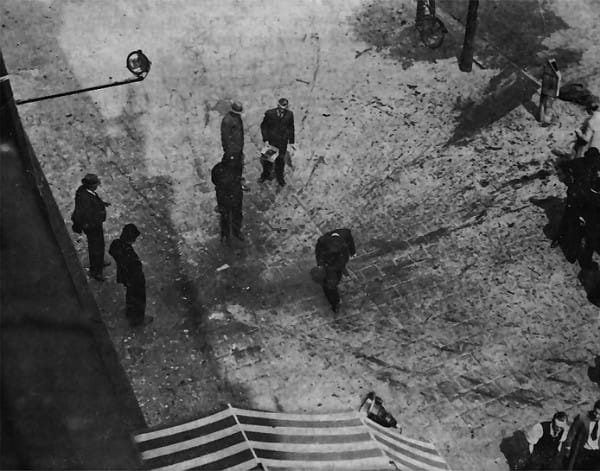
On May 28, at midday, the victim of the explosion was buried at Crooswijk Cemetery: a Lithuanian national citizen, personal enemy of Joseph Stalin, and OUN leader Yevhen Konovalets.
Konovalets Before the OUN: The Sich Riflemen
With the outbreak of the First World War, Konovalets was conscripted into the Austrian Army. In June 1915, as part of the Ukrainian Sich Riflemen, he took part in the fighting for Mount Makivka in the Carpathians, where he was taken prisoner by Russian forces.
In captivity, Konovalets rallied the Ukrainian prisoners around him, personally ensuring they were all looked after, washed, and clothed. He organized a Ukrainian library and a Prosvita cultural circle, and followed events at the front closely, tracking the political and international situation by subscribing to and reading the Russian press. When the revolutionary events of 1917 began, he escaped from captivity and traveled to Kyiv, where he joined the formation of the Galician-Bukovynian Battalion of Sich Riflemen, a unit he would lead from January 1918 onward. He commanded the Sich Riflemen in battles against Bolshevik forces in 1918–1919, but in 1919 the Riflemen’s Council voted to dissolve the unit. The Active Army of the Ukrainian People’s Republic had been trapped in a “triangle of death” between Polish, Denikin, and Bolshevik forces, exhausted by losses and a typhus epidemic. The eastern territories of Ukraine were occupied by Bolshevik Russia; the western territories by Poland.
The UVO: The First Underground Network
The idea of fighting for a Ukrainian state never left Konovalets. He saw a path to Ukrainian independence through armed struggle against the Polish Republic, which had occupied the territory of the Western Ukrainian People’s Republic (ZUNR) and installed a Polish administration that severely restricted the rights of the Ukrainian population.
To that end, the Ukrainian Military Organization (UVO) was established in August 1920: an underground revolutionary-political organization created to continue the armed struggle for the independence and unity of Ukraine following the defeat of the national liberation campaigns. Despite disputes among his comrades from the Riflemen’s Council and officers of the Galician Army, Konovalets succeeded in organizing like-minded fighters around the cause of Ukrainian statehood and took command of the UVO. He could listen to people and persuade them, to reconcile opposing sides in the name of a shared goal: the Ukrainian Independent United States.
Initially, the UVO prepared for armed action in the event of war, conducting a census of military personnel, purchasing and stockpiling weapons, seeking situational allies, and laying the groundwork for an uprising in Eastern Galicia. From 1922 onward, the UVO began carrying out acts of sabotage on railways and communication lines, arson attacks on military depots and police stations, expropriations (raids on financial institutions), and political assassination attempts against representatives of the occupying authorities, all aimed at drawing attention to the “Ukrainian question.” Work was conducted simultaneously on the international stage.
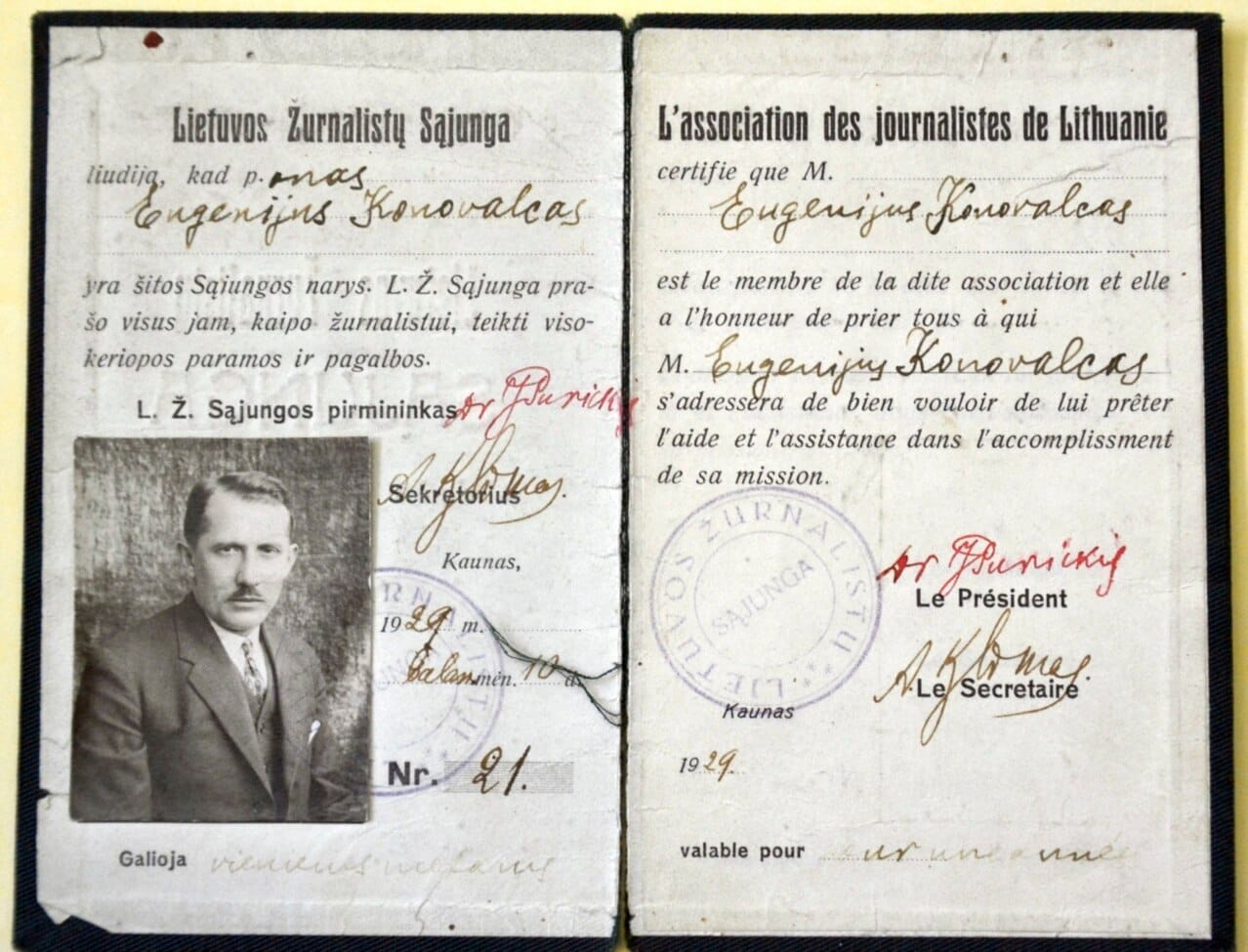
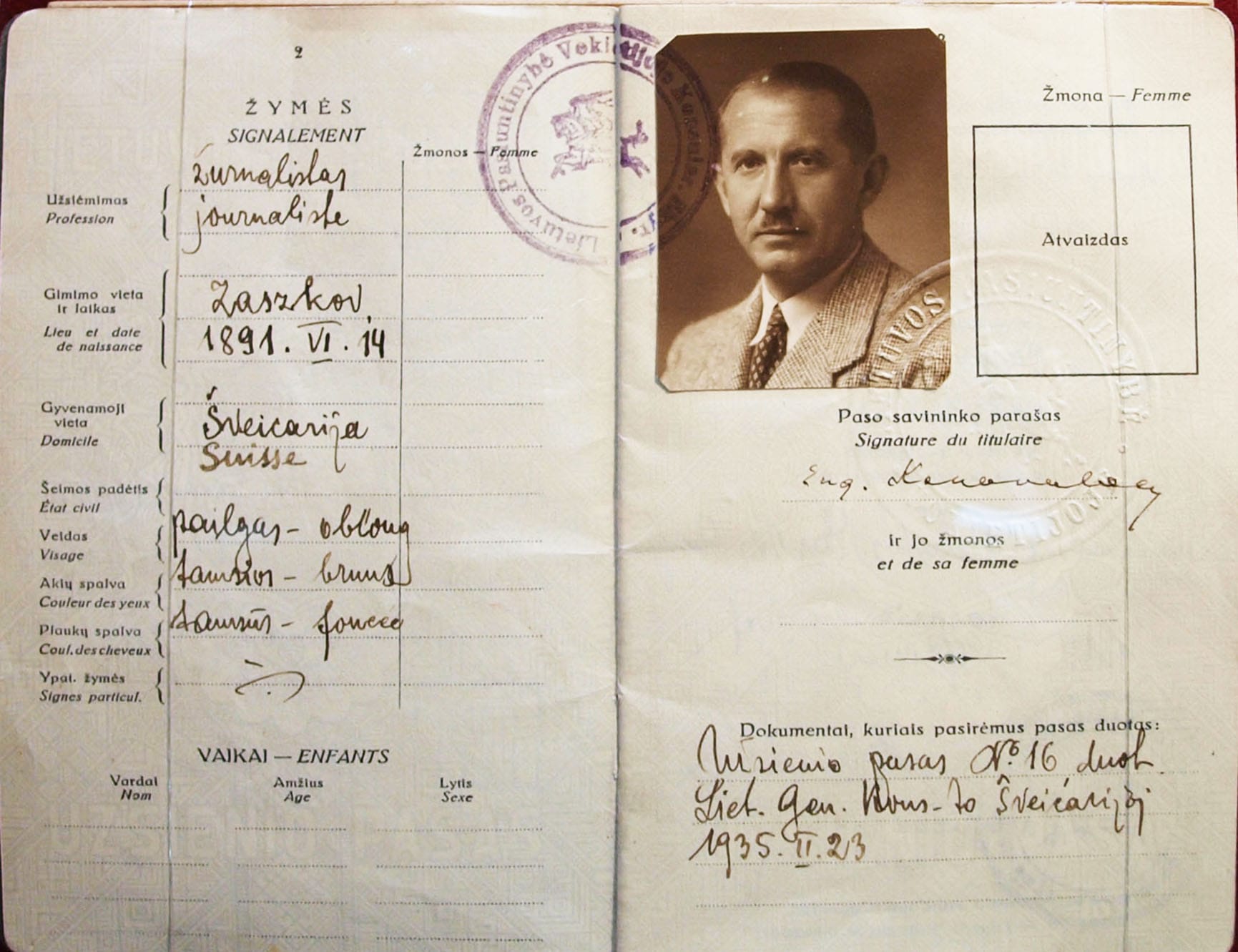
Lithuania, which also suffered from aggressive Polish actions, including the occupation of the Vilnius region and the city of Vilnius itself, began cooperating with the UVO in 1925. The UVO supplied Lithuania with military intelligence; in return, it received diplomatic support, documents, and financial assistance. Konovalets obtained Lithuanian citizenship and press credentials, which allowed him to operate legally.
A striking example of this cooperation was the delivery of two submarines purchased by Lithuania from Germany. A UVO unit obtained intelligence on the location of Polish naval forces in the Baltic Sea, enabling the submarines to be successfully delivered to a Lithuanian port. In 1926, the UVO also foiled a planned Polish military offensive.
The UVO developed an information strategy to frame its operations as a national liberation struggle rather than terrorism. To that end, the newspaper Surma was printed abroad and distributed clandestinely across the occupied Ukrainian territories.
The Founding of the OUN: 1929
The UVO had gained considerable popularity among the radicalized, revolutionary-minded youth who had gathered into various nationalist associations. To unite all nationalist forces in the struggle for Ukrainian statehood, Konovalets put forward the proposal to establish the OUN.
The Organization of Ukrainian Nationalists was a Ukrainian underground national liberation movement with the goal of restoring independence and building a Ukrainian Sovereign United State, to be achieved through national revolution and armed struggle against the occupying regimes of Poland and the USSR. Over time, this movement evolved into a clearly structured hierarchical organization led by Konovalets, who, through force of personality, authority, and discipline, was able to smooth over internal contradictions and keep members working toward a common purpose.
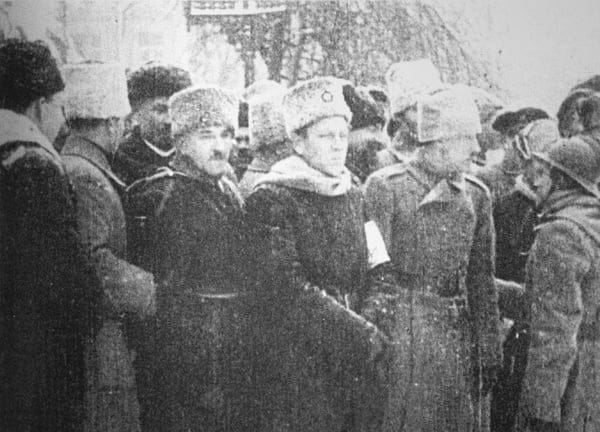
In Konovalets’s vision, the OUN was to combine political and armed struggle directed against the enemies of Ukrainian statehood. Active resistance to the Polish occupation intensified through sabotage, expropriations, and assassinations of senior officials, the most prominent being the killing of Polish Interior Minister Bronisław Pieracki. His authority among the nationalists was unquestioned, enabling him to contain the tensions between the old guard of émigré circles and the hotheads from the occupied territories of Galicia, who dismissed the émigrés’ style of resistance as “café politics.”
OUN cells were established across Europe, in Austria, Czechoslovakia, Germany, Lithuania, and Italy, as well as in the Russian Far East and the United States. Under Konovalets’s leadership, the OUN expanded its activity well beyond western Ukraine, drawing the Ukrainian diaspora into the liberation movement and seeking the support of foreign governments in the struggle against the USSR and Poland. He made notable trips to Ukrainian communities in the United States, where he held meetings and raised funds for the armed struggle against the occupiers. At the League of Nations, the work carried out under Konovalets resulted in the raising not only of the Western Ukrainian lands question, but also of the Holodomor of 1932–33, a move that alarmed Moscow considerably.
The Kremlin clearly saw in Konovalets a threat: a man capable of organizing a broad resistance movement against Bolshevism. The Soviet security services began hunting the colonel.
The OUN and the NKVD: The Hunt Begins
The operation to eliminate Yevhen Konovalets ran from 1933 to 1938 under the codename “Stavka,” carried out by the NKVD, the People’s Commissariat of Internal Affairs (Russian: NKVD). One of the USSR government’s ministries with sweeping powers, its primary function was the elimination of political opponents of Soviet authority.
To insert an assassin, the NKVD devised a complex, multi-stage scheme. A key role was played by Vasyl Lebed, a former Sich Riflemen corporal who had been tasked with organizing underground resistance cells but had fallen into the hands of the Cheka and agreed to cooperate. In 1933, Lebed traveled to Belgium, made contact with Konovalets, and convinced him that he had established an underground OUN cell, then returned to the Ukrainian SSR.
Lebed and Pavel Sudoplatov, a career NKVD officer, arrived in Finland in 1935 and made contact with Konovalets, gradually building his trust. Lebed introduced Sudoplatov as his nephew, Pavlo Valiukh, a man ready to fight for Ukrainian statehood.
Sudoplatov and the Rotterdam Operation
Agent “Valiukh” had already met with Konovalets on several occasions, so the colonel felt no sense of danger. In his memoirs, Sudoplatov recalled that the order to kill Konovalets was given personally by Joseph Stalin, who viewed Konovalets as a figure capable of organizing a future uprising of peoples against the USSR.
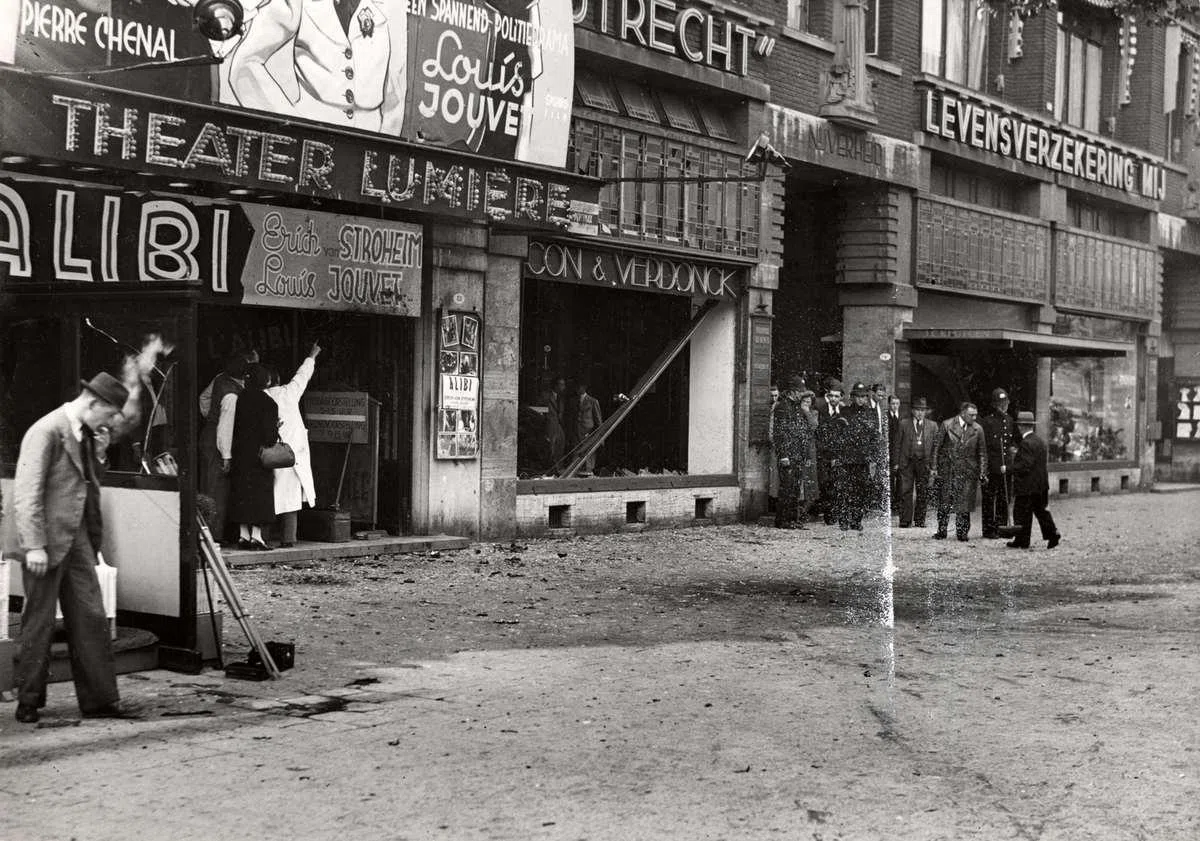
Meeting the colonel at the Atlanta restaurant, the assassin left the chocolate box and departed. The bomb’s timer was set to detonate in thirty minutes. Their conversation lasted eight minutes, but three minutes after it ended, at 12:16, as Konovalets stepped out onto the street, a powerful explosion occurred. In all likelihood, the operative was not meant to survive either, ensuring that no one could speak to the details of the killing.
The OUN Split and Konovalets’ Legacy
The assassination of OUN leader Yevhen Konovalets had grave consequences for the Ukrainian liberation movement. The tensions between the younger generation and the old guard, skillfully contained by Konovalets during his lifetime, deepened sharply after his death. Exactly as Soviet leadership had calculated, this led to a split and the weakening of the OUN. The conflict fractured the nationalist movement, giving rise to the OUN(b), the Banderites, and the OUN(m), the Melnykites.
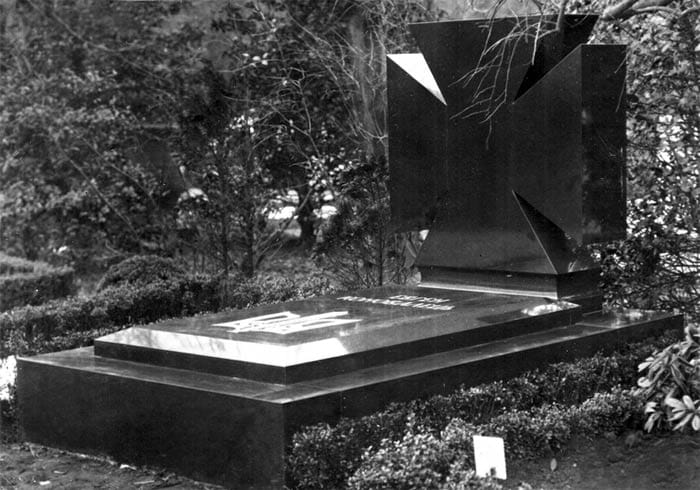
Though the colonel’s death was an irreparable loss, it did not destroy the Ukrainian nationalist movement. His work laid the foundation for the ongoing struggle for statehood and continues to inspire new generations of fighters for the independence of their nation.